Samanoo
Samanoo is one of the seven items that is typically placed on the Sofreh Haftseen for Norouz. However, it can be made and eaten at any time. The sweetness is all natural and comes from the wheat, but some choose to add more sugar. It helps to have some extra people around to stir 🙂.
In Persian tradition, dining is a harmony of hot and cold temperaments (Garm o Sard). Serve this dish alongside:
Fragrant Finishing Secret: Grind saffron threads with a pinch of sugar in a mortar and steep in warm water for maximum crimson color. Always stir in rosewater (golab) and crushed cardamom during the final minutes of cooking so their delicate floral oils stay vibrant.
Ingredients
مواد لازمStep-by-Step Instructions
طرز تهیهSource: Printed from PersianRecipes.com — View full photos, Persian pantry tips, and interactive serving scaling at:
More in Desserts & Sweets
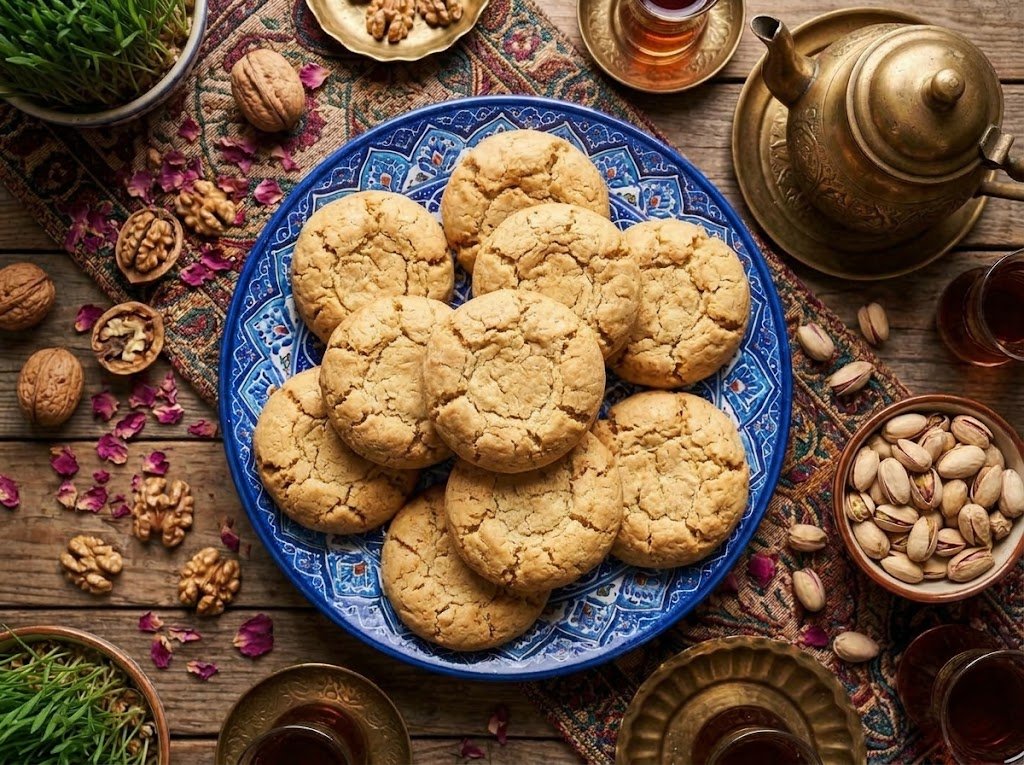
Naan Gerdooee (Persian Walnut Cookies)
There are a couple of ways to prepare the walnuts for Naan Gerdooee—either chopped or ground—and I have chosen to use coarsely ground walnuts for the best bakery-style texture in this Persian cookie recipe. Note: Make sure to beat the egg yolks and powdered sugar for the full 5 minutes until pale and creamy so the cookies puff up with a crisp outside and chewy center!
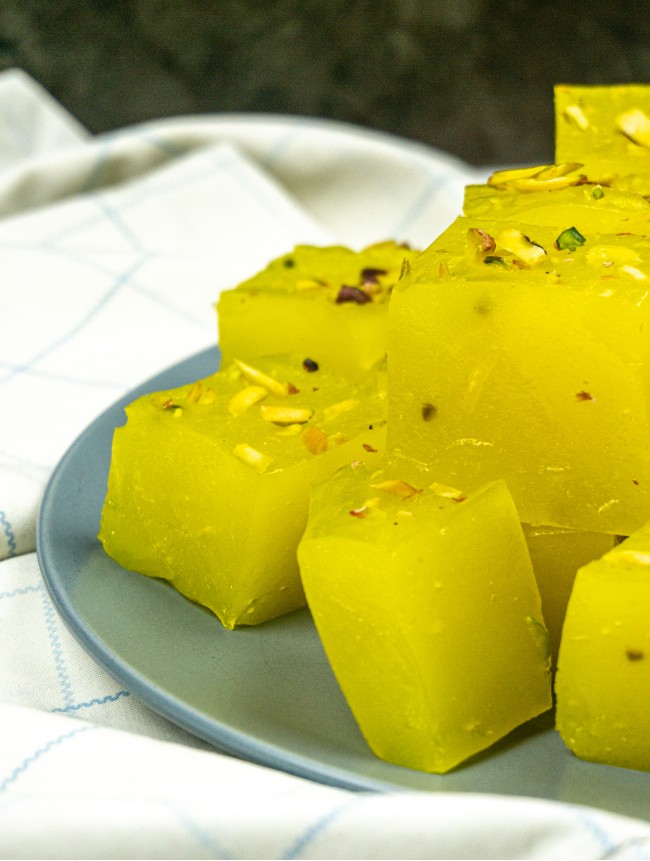
Masghati
There are a few different variations of Masghati, which is a Persian sweet made basically from starch. This specific recipe is for Masghati borideh shodeh (cut up pieces). You basically want to allow all the water to evaporate, until it is fully thickened and if you create a line across the top with a knife the line doesn’t fade that easily 🙂.
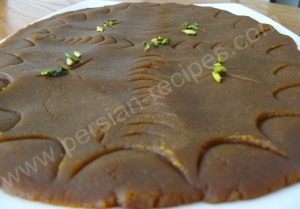
Persian Halva (with Video)
This specific halva is made with toasted white flour, rose water, and golden saffron. There are many different halvas in Persian cooking and I hope to learn how to make the majority of them! It is aromatic, sweet, and comforting.
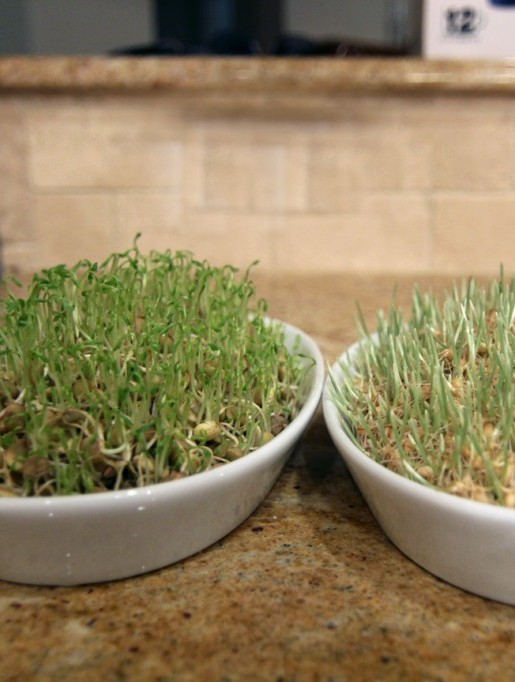
Sabze Eyd – A Complete Day By Day Guide
We’re about 12 to 13 days away from Saleh Tahvil. Sabze is one of the most important center pieces on the Haft Seen spread. There are three types of seeds usually used to grow the Sabze for Norouz: Wheat, Lentils, and Mungs. I’ve decided to grow all three and see how fast and how pretty they grow. My general knowledge is that Wheat takes roughly 12 to 13 days to reach a good height for your Haft Seen spread. Lentils take a little longer (3 days or so). Mungs should be the same as Lentils.